Quantcast

2010 Demographics / Country Usage for iPad


Guest Post
Apple’s revolutionary tablet computer, the iPad, was announced January 27, 2010. The iPad Wi-Fi version was first released on April 3, 2010. The 3G version was released April 30, 2010. In the first 80 days, 3million units were sold. Projected sales for 2010 will be 10 million units worldwide. The iPad has been breaking sales records in a world wide recession. One can only wonder what sales would have been in better economic times.

Apple had to delay international release of the iPad due to overwhelming US demand for it. Apple released the iPad to nine countries on May 28, 2010. Preorders were available May 10, 2010. The nine countries are Germany, Great Britian, France, Italy, Spain, Switzerland, Japan, Canada, and Australia.

On July 23, 2010, Apple released the iPad to Hong Kong, Singapore, Belguim, Netherlands, Mexico, New Zealand, Luxembourg, Austria, and Ireland.

For the US and international markets, 60% of sales were made to people aged 30 to 54 years old. One difference between US and international users is the level of interest in technology. US iPad owners are focused more on social media, video, and audio. International users are more interested in the more traditional computer applications such as web research and could computing.

Japan has shown special interest in the iPad. 50% of the computer and technology magazines featured iPad cover stories for May and June 2010. One of the most interesting demographic features of the Japanese market is the interest level among the elderly, age 55+. They like the iPad for its simplicity and forgiving nature in regards to mistakes.


About the author: James Mowery is a computer geek that writes about technology and related topics. To read more blog posts by him, go to laptop computers.

Easy Multivariate Testing with Visual Website Optimizer

Testing is an essential part of online strategies and Visual Website Optimizer is an ideal tool to help you get up and running with AB/Multivariate testing very quickly. I had a chance to chat with Founder, Paras Chopra to get his insight into Visual Website Optimizer.

Manoj:Give us the ‘elevator pitch’ on your technology.

Paras Chopra: Visual Website Optimizer is the world’s easiest A/B and multivariate testing tool. Meant for marketers who want to take charge of conversion rate optimization for their business, the tool eliminating involvement of IT resources by removing all HTML code and integration hassles. Using the tool, a marketer can rapidly test headlines, images, buttons, forms, styling, layout etc. to find out the best converting version of the landing page and/or website. Till now 2000+ enterprises, small businesses and agencies have used the tool to increase sales and conversion rates by as much as 90%.

Manoj:Can you please highlight some of the features which provide the most value?

Paras Chopra: There are three main features in Visual Website Optimizer that provide most value. The first one is the tagless integration where you we require a user to upload a small snippet of code into his/her website only once and after that s/he can create unlimited number of (different kinds of) tests without needing to touch code ever again. So, we don’t require the user to add separate code for separate sections of test or for different conversion goals. The single code snippet works any kind of test that a marketer might want to do. This saves a lot of time, that would have otherwise be spend in integrating every new test into the website.

The second valuable feature is the WYSIWYG editor which lets a marketer create variations using a familiar, MS-Word like interface. S/he is not required to know HTML or JavaScript while creating a test. This really speeds up the tests. So for an example, if you want to do a simple test involving button and headline change. You can select those sections in the visual test designer and then simply change the button and headline in WYSIWYG editor. That’s it and you are done. No HTML; no technical complexities. Here is a screenshot:

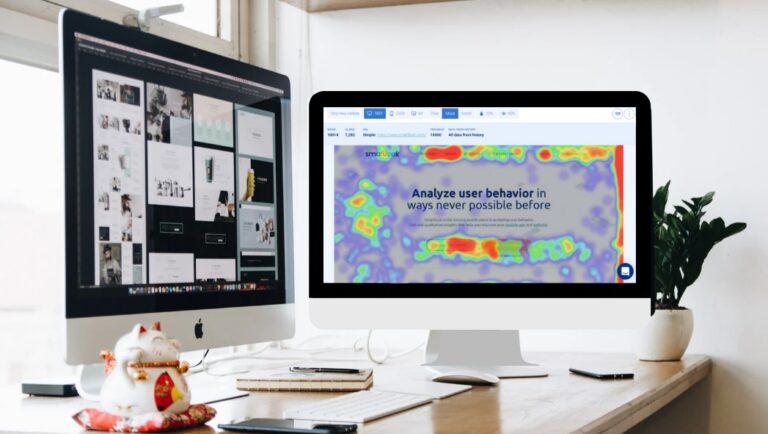
Clickmaps and heatmaps is another feature that our customers love. In addition to quantitative conversion rate report, in our tool you also get access to a heatmap which shows visually which parts of your page (or test variation) gets mosts clicks. Our users love this report because it complements the conversion rate data they have and it shows other opportunities on page for optimization. Here is an example:


Manoj:What is your competitive advantage over similar technology?

Paras Chopra: Our competitive advantage is the usability of the tool, our focus on marketers and the price-point for the features we offer. Ours is the first and only tool that makes A/B and multivariate testing a fun and easy job. Fun because the tagless integration allows you to always keep testing your hypothesis without worrying about implementation. So, for example, if you want to do a quick test to finding out if ‘Add to Cart’ works better than ‘Buy Now’ you can create and execute that test in less than 10 minutes. And since reports are realtime you can instantly start getting feedback on your test variations. All these minor features that promote ease-of-use add up to make Visual Website Optimizer the only “marketer-friendly” testing tool out there.

Manoj:Who is your intended target market?

Paras Chopra: Our target market is divided into three segments: a) small/medium sized businesses who do testing in house; b) marketing agencies & consultancies; and c) large enterprises. Our current customer base is a mix of these three segments. Even though our focus has been one SMBs and agencies, we are starting to see great response from enterprises as well. For example, today we have Microsoft, Rackspace, 99Designs, Threadless, AWeber, amongst other enterprise users. In all we have 2000+ users (in first 6 months of launching).

Manoj:Tell us about new features/integrations/improvements that are on your product road map

Paras Chopra: Soon we are going to launch the report segmentation and targeting feature which will allow you to segment test results by different parameters: country, traffic source, search keyword, time of day, etc. So, you will be easily analyze if one of your variations works better for a particular segment (say visitors from UK who searched for “shoes”). That variation may not be overall winner but if it works best for a particular segment, we will then allow the user to setup targeting to always show that particular variation to that particular segment. We believe the segmentation and targeting feature will take our product to the next level because marketers and analysts will have all CRO resources and tools within a single application: testing, analyzing and targeting.

For SMBs and agencies, pricing plans range from $49-$249/month. For enterprises (or other users) with large traffic requirements, we have custom plans where the price typically ranges from $500-$3000 per month.

Ultimate Multivariate & AB Testing Guide – WhichMVT.com

If you’re looking for a multivariate/landing page testing solution then I highly recommend you take a look at http://www.whichmvt.com/ (developed by the Conversion Rate Experts). WhichMVT is a complete guide to the most popular multivariate testing platforms available and provides information on each vendors such as: Price, Technology, Features, Support, and Reviews. Here is quick summary on what you can find on a few of the vendors:
  • Accenture: Setup costs around $33K a year, provides AB/MVT Testing, it can be self hosted, and can be used on email campaigns.
  • ION Interactive has a monthly price of $995, provides taguchi MVT, can segment traffic and has a platform for making web pages.
  • OnDialog costs 7.5K/year, doesn’t have the ability set mulitple goals, and customer support by phone available.

Google Acquisitions 2001-2010

Scores.org has put together an excellent infographic which details all of Google’s acquisitions since 2001. From Picasa to Keyhole to MeasureMap to YouTube to Aardvark – they’re all there. To say Google’s has been busy is an understatement.

Google Acquisitions.

Research by Scores.org

Almost 50% of Marketers Don't Measure Social Media Campaigns

King Fish Media has released the results of their social media survey in which they captured the thoughts of over 450 respondents to get their take on Social Media usage and measureability. Their 23 page report is a very quick read and is packed full of useful information. Some highlights from the report below:

  • Spending on social media will be increasing over the next year as three quarter
  • The responsibility for creating and maintaining social media falls mainly on the marketing department
  • Only a small minority of companies are outsourcing their social media efforts
  • 2/3 of the companies surveyed focus their social media efforts on their company as a whole
  • LinkedIn, Twitter and Facebook are the most commonly used social media sites MySpace has very little usage or interest among respondents
  • 85% are using a Twitter account and over two thirds have a Facebook fan page for their company, while roughly half have created a LinkedIn group or blog
  • Only 30% of respondents have conducted ad campaigns on social media sites
  • Nearly half of all companies have not measured the ROI of their social media campaigns
  • Almost 2/3 of marketers are using video content on their web sites and more than half have deployed video on sharing sites such as YouTube

Sample Data:

What metrics are you tracking in Social Media campaigns?

How do you rate the ROI of your social media campaigns?

Social Network Ad Spending $4+ Billion in 2011

Great article from eMarketer yesterday which discusses the concept of how social marketing is growing across the globe and not just in the United States. eMarketer uses the following stats to back up their point:

  • Facebook is popular with 500 million users, but QQ in China is larger with over 550 million users
  • The social network/blog category reached 86% of active internet users in Brazil (Nielsen)
  • In New Zealand, Hong Kong, Canada and Singapore Facebook was the No. 1 website (not Google)
  • In Poland, Nasza Klasa reached 58% of internet users as of spring 2010, making it the No. 3 website.
  • Netlog (out of Belgium), has increased its user base to 68 million members as of July 2010
  • Social Network ad spending will grow to over $4 Billion in 2011

Top Online Testing Platforms 2010 – Forrester Wave Report

Forrester recently published their latest wave report on the topic of online testing platforms. In the report, Joseph Stanhope reviewed the top 9 players in the online testing space: Adobe Test & Target, Amadesa Customer Experience Suite, Autonomy Optimost, Google Website Optmizer, Maxymiser Content MVT, SiteSpect, Vertster Conversion Optmization Suite, and Webtrends Optimize.

Although the space is full of strong performers, Adobe Test & Target (formerly Omniture) and Autonmoy Optimost were placed as the leaders: Adobe excels in overall application usability, customer satisfaction, and content support. Autonomy stands out in administration, deployment options, and breadth of testing techniques. Both vendors demonstrate strong integration options with the Web marketing ecosystem, enabling marketers to plug online testing into a broader application framework.